Digital marketing has always been about understanding people—what they need, how they think, and what motivates them to act. But as audiences become more sophisticated and search engines more intelligent, simply guessing what customers want is no longer enough. This is where NLP digital marketing reshapes the entire landscape.
NLP (Natural Language Processing) gives marketers the ability to interpret how people speak, type, and express themselves online. Instead of focusing only on keywords, NLP uncovers intent, sentiment, tone, emotion, and context. This leads to more relevant campaigns, smarter SEO, more meaningful conversations, and ultimately—higher conversion rates.
In this descriptive and informational guide, we’ll explore how NLP works, why it matters, and how businesses can start using it to turn conversations into conversions.
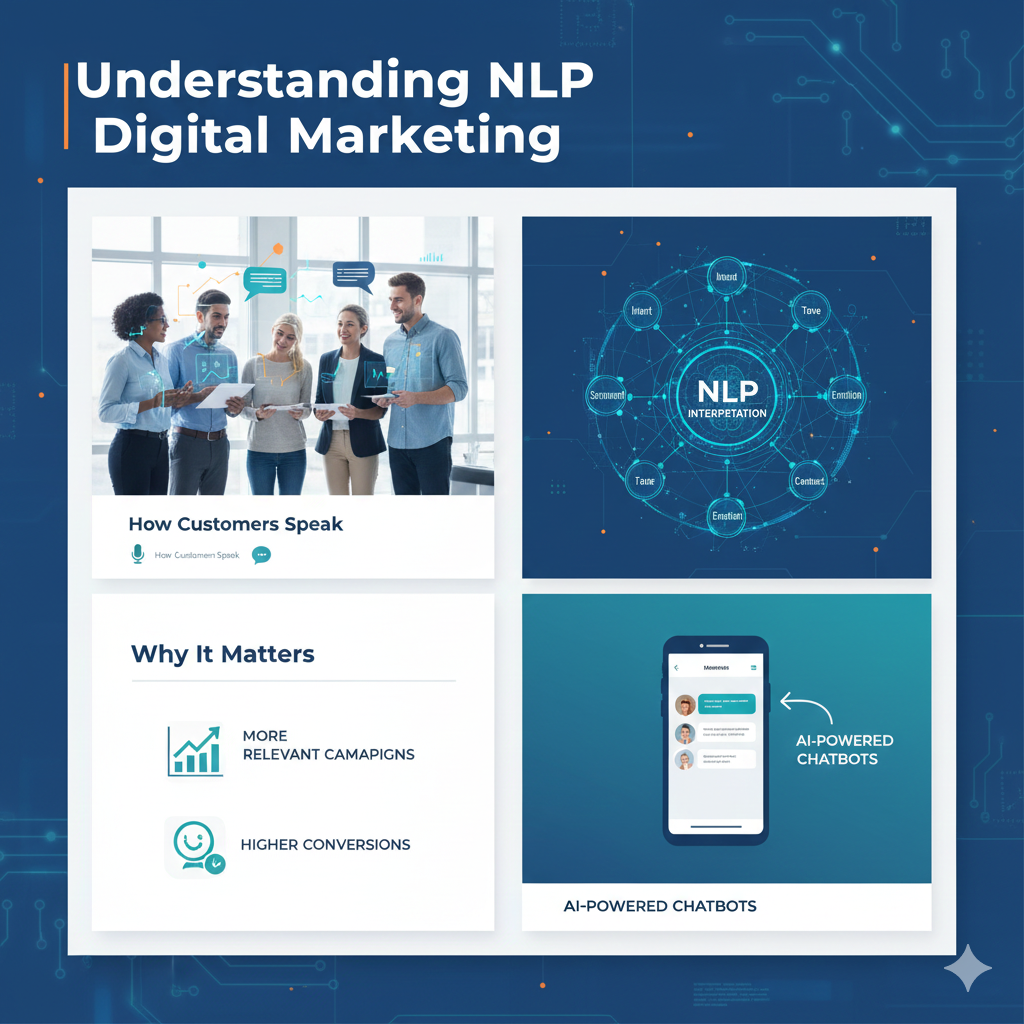
Understanding NLP Digital Marketing
Natural Language Processing is a powerful branch of artificial intelligence that enables machines to understand human language. Today, platforms like Google, Siri, Alexa, Meta, TikTok, and modern chatbots rely on NLP to interpret text and speech with increasing accuracy.
In digital marketing, NLP goes far beyond traditional analytics. Instead of analyzing only keywords or clicks, NLP helps brands understand:
- How customers describe their needs
- What emotions they express
- What their underlying intent is
- Which barriers stop them from converting
- How they prefer to communicate
This deeper understanding allows businesses to craft messages that feel personal, human, and relevant—exactly what modern consumers expect.
Why This Matters
Imagine your brand understanding what customers want before they finish typing. Imagine being able to detect frustration in a support message or excitement in a product review. NLP makes this possible by translating real human language into meaningful insights.
That is the true power of NLP digital marketing.
Why NLP Drives Conversions
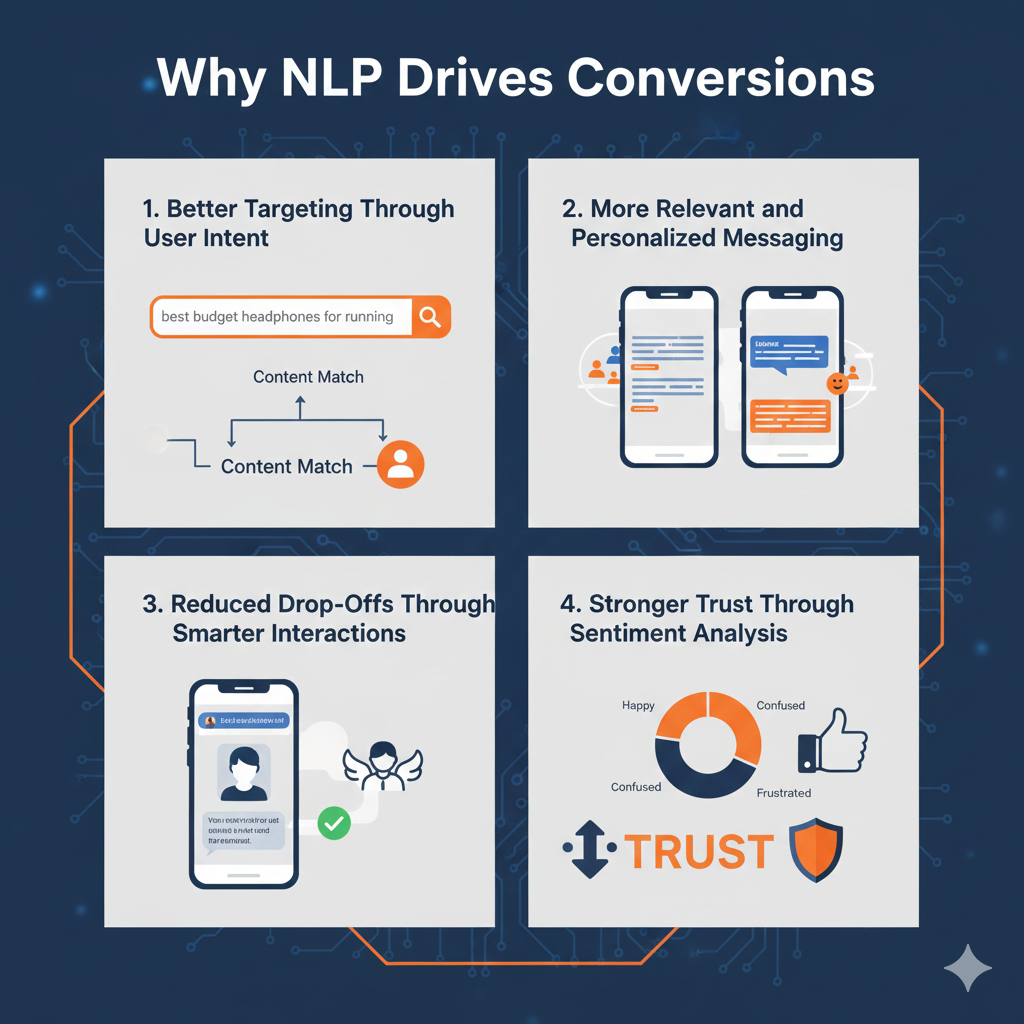
NLP doesn’t just improve marketing efficiency—it directly boosts revenue by enhancing every step of the customer journey.
1. Better Targeting Through User Intent
Most customers don’t type perfect keywords. They type questions, problems, feelings, and incomplete thoughts. NLP interprets these patterns and reveals the true intent behind queries.
This ensures your content, ads, and landing pages match what people actually want—not what marketers assume they want.
2. More Relevant and Personalized Messaging
Different audiences respond to different tones and language styles. NLP helps you adjust messaging for tone, formality, emotional triggers, and interest area.
Instead of “one-size-fits-all,” your marketing speaks directly to each segment’s needs.
3. Reduced Drop-Offs Through Smarter Interactions
NLP-powered chatbots, forms, and voice assistants reduce friction by answering questions instantly.
Customers stay engaged longer because they feel supported instead of frustrated.
4. Stronger Trust Through Sentiment Analysis
NLP analyzes emotions in reviews, comments, or support tickets. This helps brands:
- Spot problems instantly
- Address negative experiences before they escalate
- Highlight positive themes in marketing messages
Trust is one of the most powerful drivers of conversions—and NLP strengthens it through emotional understanding.
How NLP Is Used In Digital Marketing
Businesses across industries—from HVAC to law firms to SaaS—are using NLP to improve conversions, user experience, and search visibility. Below are the most impactful applications.
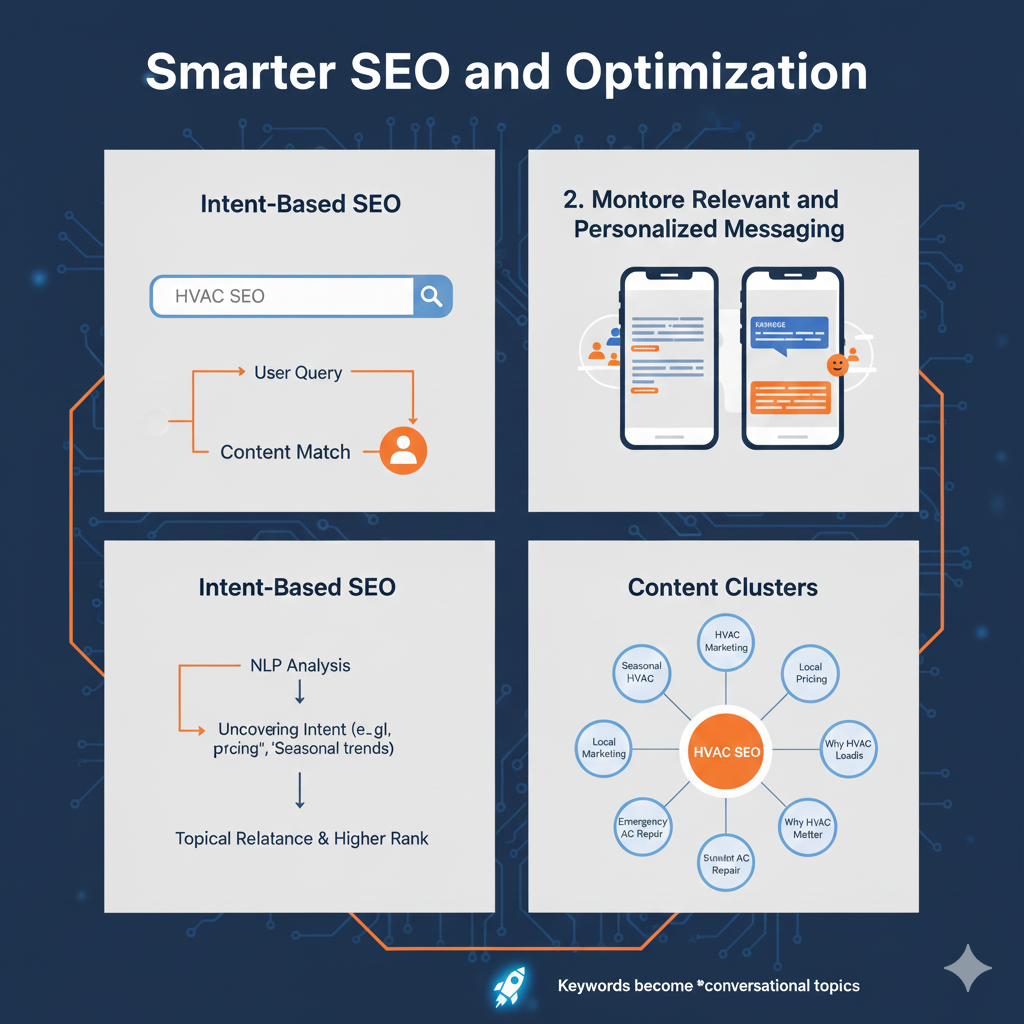
1. Smarter SEO and Content Optimization
Search engines now reward content that genuinely satisfies user intent. NLP tools help marketers uncover:
- What users really mean when they search
- Which related topics matter most
- What questions need answering
- Which semantic keywords strengthen topical relevance
Example
If users search for “HVAC SEO,” NLP may reveal related intent-based topics like:
- “Seasonal HVAC marketing trends”
- “Local HVAC pricing expectations”
- “Why fast lead response matters in HVAC sales”
By covering these in one content cluster, your pages become more relevant and rank higher.
2. Conversational Chatbots That Feel Human
Traditional chatbots often frustrate people with robotic replies. NLP-powered chatbots interpret:
- Intent
- Conversation history
- Tone
- Context
Example
User: “Do you handle SEO for law firms?”
Bot: “Yes, we provide specialized SEO services for legal practices.”
User: “What about pricing?”
Bot: “Here’s an overview of our pricing for law firm SEO services.”
The bot connects both questions as part of a single conversation—just like a human.
This improves engagement and increases the chances of capturing leads.
3. Sentiment Analysis for Better Brand Insights
NLP can scan thousands of customer comments, reviews, and messages to detect emotions.
It identifies whether users feel:
- Happy
- Confused
- Frustrated
- Interested
- Disappointed
Example
If customers consistently praise your fast support but complain about onboarding, you can:
- Emphasize “fast support” in your marketing
- Improve your onboarding internally
This increases trust and reduces drop-off rates.
4. Advanced Email Personalization
NLP enhances email marketing by analyzing user behavior, interests, and emotional triggers.
It can identify:
- Which subject lines get the most opens
- Which topics attract clicks
- How the tone of an email influences engagement
- Which audience segments need different messaging
How To Get Started With NLP Digital Marketing
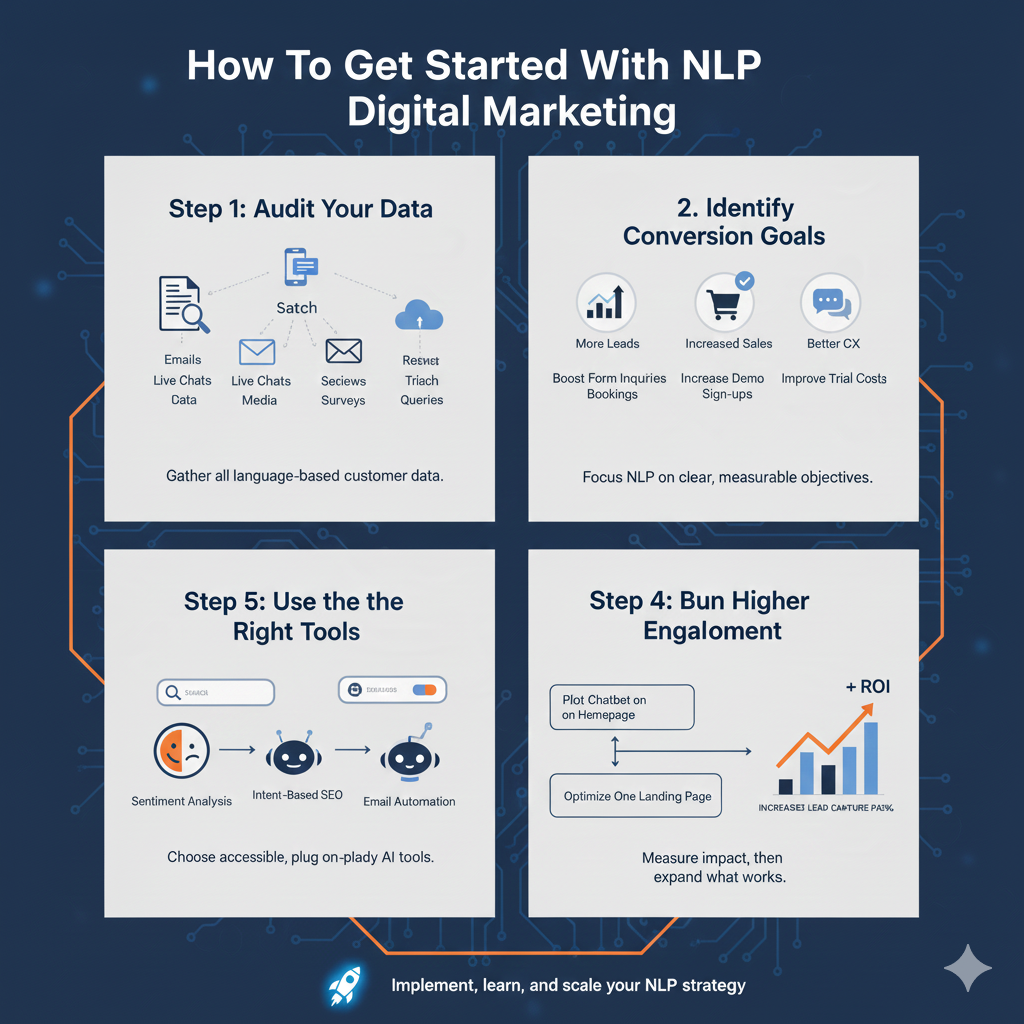
Adopting NLP doesn’t require complex technical knowledge or expensive infrastructure. You can begin gradually and expand your strategy as you see results. Below is a detailed roadmap designed to help businesses implement NLP digital marketing effectively.
Step 1: Audit Your Data
Before you can use NLP, you need to gather the language-based data your business already has. This is the foundation of all AI and NLP insights.
What This Means
Start by collecting any type of customer-facing or customer-created text. This includes:
- Customer support emails and transcripts
- Live chat conversations
- Social media comments and DMs
- Reviews on Google, Yelp, or industry platforms
- Survey responses
- Website search bar queries
- Lead form responses
- Google Search Console keyword data
- Frequently asked customer questions
This data reveals how customers describe their problems, what language they use, what frustrates them, and what motivates them. NLP tools analyze these text patterns to uncover sentiment, intent, tone, and recurring themes.
Why This Matters
The more language data you collect, the more accurate and useful your NLP insights will be.
It ensures your NLP tools have enough real-world information to analyze customer behavior effectively.
Step 2: Identify Conversion Goals
NLP is powerful, but it must be focused on clear objectives to provide measurable results.
What This Means
Choose one high-value goal to start with—something that significantly affects your revenue or lead flow. For example:
- Boosting contact form inquiries
- Increasing demo bookings
- Improving free trial sign-ups
- Reducing customer support load
- Lowering bounce rates on key landing pages
- Improving email engagement and click-through rates
Why This Matters
Starting with one clear goal prevents overwhelm and helps you track success accurately.
When you know your goal, NLP can be applied in a targeted way—for example:
- If the goal is more leads, focus NLP on chatbots and landing page messaging.
- If the goal is better SEO, focus NLP on keyword intent research and content expansion.
- If the goal is better engagement, focus on email personalization and sentiment-based segmentation.
Step 3: Use the Right Tools
You don’t need to build NLP systems from scratch. Many accessible tools already use NLP for marketing.
What This Means
Choose tools that match your goals. Examples include:
For Sentiment Analysis
- Tools that analyze emotions in reviews and comments
- Platforms that score text as positive, negative, or neutral
For Intent-Based SEO
- Keyword intent tools
- AI-powered content optimization tools
- Semantic clustering tools
For Chat Automation
- Chatbots that interpret user intent
- AI conversational tools that handle multi-turn dialogue
For Email Personalization
- Email platforms that analyze open behavior, tone, and content preferences
Why This Matters
Selecting the right tools reduces cost, saves time, and gives you immediate access to AI capabilities without needing coding expertise. Most tools offer plug-and-play features that businesses can set up in hours, not weeks.
Step 4: Run Small Tests
Instead of overhauling your entire marketing strategy, start with small experiments to measure NLP’s impact.
What This Means
Apply NLP to ONE campaign or channel and measure the difference. Examples:
- Build an NLP-powered chatbot for your homepage
- Create content clusters based on search intent rather than keywords
- Write emails using sentiment analysis insights
- Add dynamic personalization to a landing page
- Analyze user reviews and update your messaging based on common themes
Why This Matters
Small tests help you understand:
- Which NLP features deliver the biggest improvements
- How your audience responds to AI-powered personalization
- Which tools work best for your business
- Whether NLP increases conversions in measurable ways
This phase ensures you learn and optimize before scaling.
Step 5: Scale What Works
Once NLP begins showing clear improvements, expand successful strategies across more marketing channels.
What This Means
After validating what works, apply NLP insights to:
- SEO: Build more semantic content clusters
- Email: Segment users by behavior and emotional tone
- Paid Ads: Improve ad relevance with intent-based messaging
- Social Media: Monitor sentiment and tailor posts accordingly
- Chat & Support: Add NLP features to all customer-facing communication
- Website Personalization: Provide dynamic content based on user intent
Real Examples of Scaling
- If NLP reveals users often complain about pricing clarity, update your landing page copy.
- If NLP shows users love your fast support, highlight it in ads and homepages.
- If chatbot metrics show higher engagement at night, adjust your support and automation strategy.
Why This Matters
Scaling allows NLP to transform your entire marketing ecosystem—not just one campaign.
It creates a consistent, personalized experience at every stage of the funnel, leading to:
- Higher conversions
- Happier customers
- Better retention
- More efficient marketing performance
Conclusion
NLP digital marketing is no longer a futuristic concept—it’s a practical, high-impact strategy that helps brands understand their customers on a deeper, more human level. By analyzing real language, uncovering intent, detecting emotions, and responding with relevance, NLP transforms every touchpoint of the customer journey. It makes marketing smarter, conversations more meaningful, and conversions more consistent.
Whether you use NLP to improve SEO, power conversational chatbots, personalize emails, or analyze customer sentiment, the value is clear: you gain the insights needed to communicate with precision and build trust faster. The result is a marketing approach that feels effortless to customers yet incredibly powerful for businesses.
As competition increases and consumers expect hyper-personalized experiences, brands that adopt NLP today will be the ones that lead tomorrow. Every message becomes more targeted, every interaction more intuitive, and every campaign more effective—because it’s built on understanding, not assumption.
If your goal is to turn conversations into conversions, NLP is the strategic advantage you need. And with the right tools and guidance, getting started is easier than ever.
Let NLP drive your next stage of growth—your customers are already speaking. It’s time to start listening.