How Artificial Intelligence is transforming UI/UX design for businesses. Learn how AI-driven tools enhance user experience, streamline interfaces, and boost business growth. Explore the future of design with AI-powered solutions!
How AI is Revolutionizing UI/UX for Business Growth
In today’s digital-first world, businesses must prioritize user experience (UX) and user interface (UI) design to stay competitive. With rapidly evolving technology, Artificial Intelligence (AI) is stepping in as a game-changer, revolutionizing how companies approach UI/UX design. By leveraging AI-driven tools and insights, businesses can create personalized, seamless, and intuitive interfaces that not only captivate users but also foster growth and success.
In this blog post, we’ll dive deep into how AI is reshaping the landscape of UI/UX design, the benefits it brings to businesses, and how you can harness its power to enhance user satisfaction and drive business growth.
What is AI-Driven UI/UX Design?
AI-driven UI/UX design refers to the integration of machine learning, natural language processing, predictive analytics, and other AI technologies into the design process. This allows designers to create smarter, more responsive interfaces that adapt to user behavior, optimize interactions, and predict user needs.
From personalized user experiences to automated design adjustments, AI is helping businesses enhance user engagement, reduce friction, and increase conversions by offering highly tailored experiences.
The Role of AI in Enhancing User Experience (UX)
1. Personalized User Journeys
AI allows businesses to create personalized experiences for their users. By analyzing user behavior, preferences, and historical data, AI can predict what a user is likely to do next, offering relevant content or suggestions. This not only improves user satisfaction but also increases engagement by delivering content and products users are most likely to be interested in.
For example, e-commerce platforms like Amazon and Netflix use AI algorithms to recommend products and movies based on your browsing history and preferences, providing a more personalized and enjoyable experience.
2. Dynamic and Adaptive Interfaces
One of the most exciting possibilities with AI in UX design is the ability to create dynamic interfaces that adapt in real-time to the user’s needs. AI can adjust layouts, colors, and navigation flows based on user behavior, creating an experience that feels intuitive and customized.
For instance, AI-powered interfaces can recognize a user’s emotional state through facial recognition or other behavioral signals, then adjust content or interface elements to create a more engaging or calming experience.
3. Improved Accessibility
AI-driven design tools can also help businesses make their websites and apps more accessible. AI technologies like voice recognition, text-to-speech, and natural language processing (NLP) can improve accessibility for users with disabilities. By enabling features like voice commands, real-time translation, and adaptive font sizes, businesses can ensure a more inclusive experience for all users, regardless of their abilities.

The Role of AI in Enhancing User Interface (UI) Design
1. Smart Layout Adjustments
AI tools can analyze a website’s or app’s performance and user interactions to suggest layout modifications. For instance, tools like The Grid or Adobe Sensei use AI to create adaptive layouts based on user preferences, content, and behavior patterns. These tools can automatically adjust designs in real-time, making the UI more engaging and easier to navigate.
This level of automation not only saves time for designers but also ensures that the UI remains consistent across different devices and screen sizes. With AI-powered UI design, businesses can maintain a high-quality user experience across all touchpoints.
2. Predictive Design Suggestions
AI algorithms can provide predictive design insights, helping designers make data-driven decisions about UI elements. For example, AI can predict which color schemes, font types, or layout structures are likely to be the most effective for increasing user engagement based on user behavior data and industry best practices.
With this technology, designers can optimize UI designs without relying on trial and error or manual feedback loops. This leads to faster design cycles and better results, ultimately contributing to business growth.
3. Automation of Repetitive Tasks
AI is excellent at automating repetitive tasks that would normally take up significant time in the design process. For instance, AI can assist in image optimization, color matching, and even generating design variations. This allows designers to focus more on creative and strategic aspects of UI design, while AI handles the more technical aspects.
By automating tasks, businesses can improve the speed and efficiency of their design teams, leading to faster product development cycles and quicker time-to-market.
Benefits of AI-Powered UI/UX for Business Growth
1. Enhanced Customer Retention
AI can increase customer retention by continuously learning and adapting to user preferences. Personalized user journeys and adaptive interfaces lead to better experiences, making customers more likely to return. By analyzing user interactions in real-time, AI can offer targeted recommendations, updates, or content, keeping users engaged and more likely to return to the platform.
2. Boosted Conversion Rates
AI can significantly impact conversion rates by providing businesses with tools to improve the user journey. From predictive analytics that suggest optimal placement for call-to-action buttons to AI-driven chatbots that engage users instantly, the impact on conversions is profound. When users find what they need quickly and efficiently, they are more likely to complete desired actions like purchasing a product, signing up for a service, or subscribing to a newsletter.
3. Faster Time-to-Market
With AI tools that automate parts of the design process, businesses can speed up their product development cycle. Features like real-time design feedback, predictive design suggestions, and automated testing reduce the need for manual iterations and allow companies to release new products or updates faster, giving them a competitive edge in the market.
4. Data-Driven Insights for Better Decision-Making
AI doesn’t just improve the design process—it also provides valuable insights into user behavior and preferences. By collecting and analyzing data from user interactions, businesses can gain deeper insights into what their customers truly want. These insights can be used to optimize marketing strategies, design decisions, and even product offerings.
The Future of AI in UI/UX Design
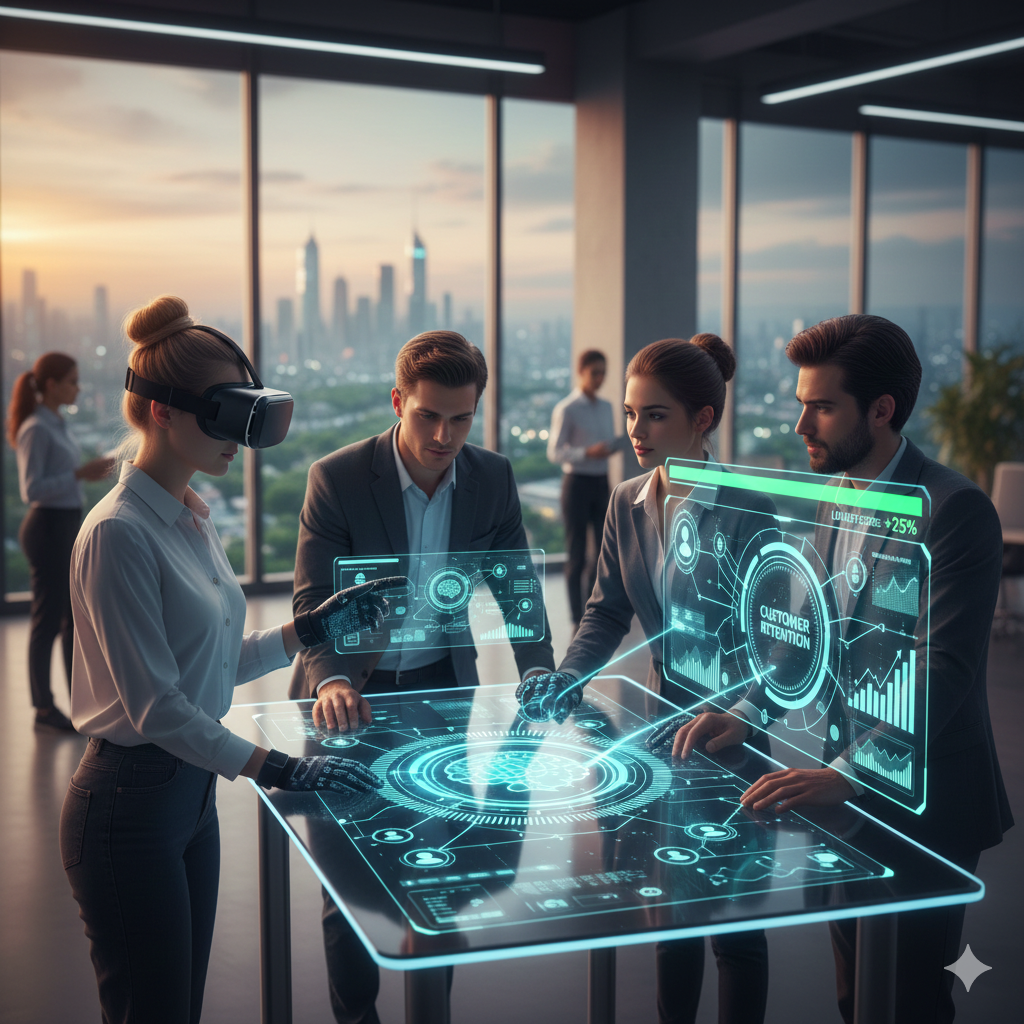
AI is still in the early stages of revolutionizing UI/UX design, but the potential for future innovations is vast. As AI continues to evolve, we can expect even more advanced tools and solutions that push the boundaries of what’s possible in design. AI-powered virtual assistants may become more sophisticated, guiding users through complex tasks with minimal friction. AR/VR experiences will likely become more personalized with AI integration, enhancing the immersive experiences for users.
Moreover, as AI becomes more accessible and affordable, businesses of all sizes will be able to leverage these technologies to stay competitive and provide top-tier user experiences.
Embrace AI for Future-Ready UI/UX Design
AI is transforming UI/UX design in profound ways, empowering businesses to deliver more intuitive, personalized, and engaging user experiences. From smart layout adjustments to predictive design insights, AI is helping designers and developers create interfaces that adapt to user behavior and drive business growth.
As AI technologies continue to evolve, the future of UI/UX design looks promising. By embracing AI tools and integrating them into your design process, you can not only enhance user satisfaction but also boost conversions, improve accessibility, and stay ahead in an increasingly competitive digital landscape.
To succeed in today’s digital world, leveraging AI for UI/UX design isn’t just an option—it’s a necessity for businesses looking to drive innovation, enhance user experiences, and achieve long-term growth.