Every marketer today is chasing the same goal: getting closer to what customers actually mean, not just what they type. That’s exactly where Natural Language Processing (NLP) in digital marketing comes in. It’s the technology quietly powering chatbots, voice search, sentiment analysis, and the AI Overviews now showing up at the top of Google results.
If you’ve ever wondered how brands seem to “understand” you before you finish typing a search query, NLP is usually the reason.
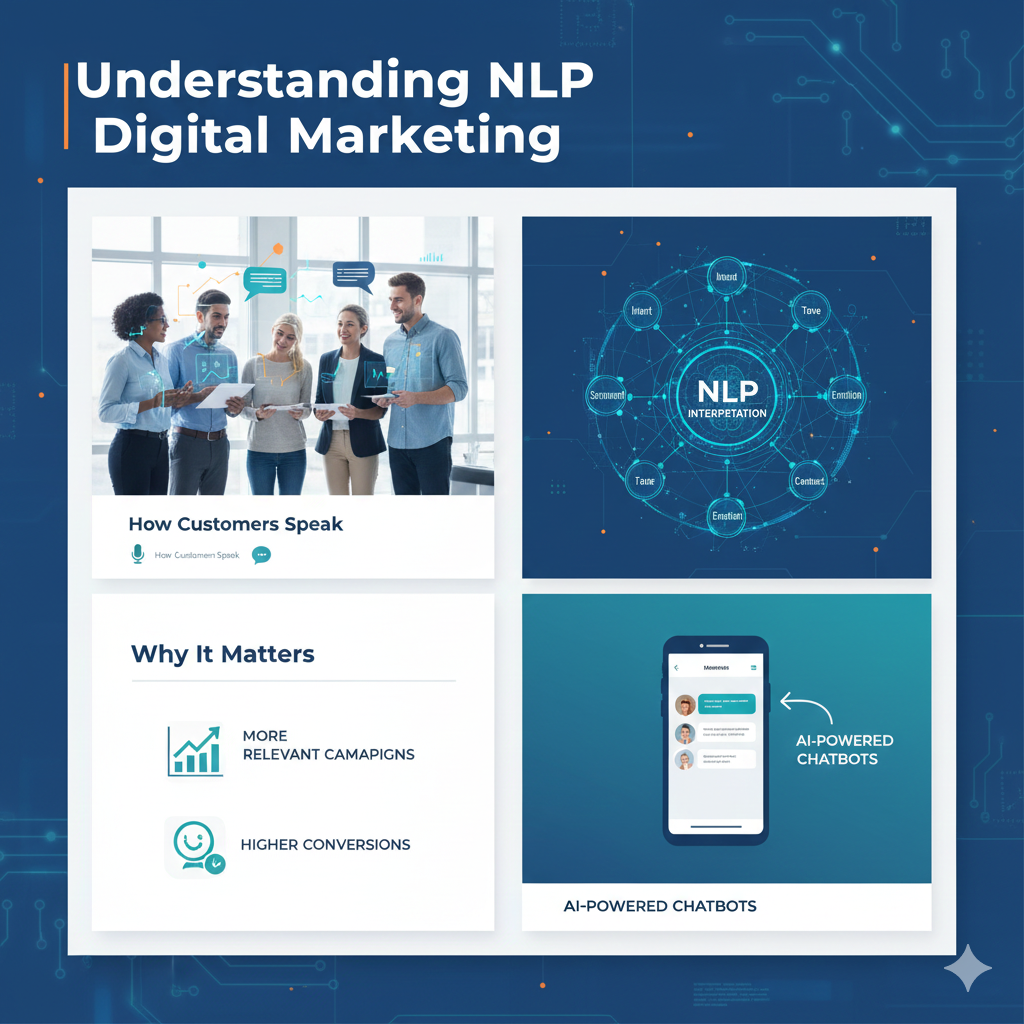
What Is NLP Digital Marketing?
Natural Language Processing is a branch of artificial intelligence that helps machines read, interpret, and respond to human language text or voice in a way that feels natural. In marketing, this means software can understand customer intent, sentiment, and context, not just keywords.
Instead of treating “best running shoes” and “which sneakers are good for jogging” as two unrelated searches, NLP recognizes they mean the same thing. This shift is a big reason why modern SEO has moved from keyword stuffing to intent-based content and why Google’s algorithms (and AI-driven search features) increasingly reward content that answers real questions clearly.
Why NLP Matters More Than Ever
Search behavior has fundamentally changed. People now ask full questions to voice assistants, chat with AI tools before buying, and expect brands to respond conversationally. A few reasons NLP has become essential:
- AI Overviews and answer engines pull content that directly and clearly answers a question this is the foundation of Answer Engine Optimization (AEO).
- Voice search relies entirely on NLP to interpret spoken queries.
- Customer service chatbots use NLP to resolve issues without human agents.
- Sentiment analysis helps brands understand how people feel about them, not just what they say.
Marketers who ignore NLP are essentially optimizing for a search engine that no longer fully exists.
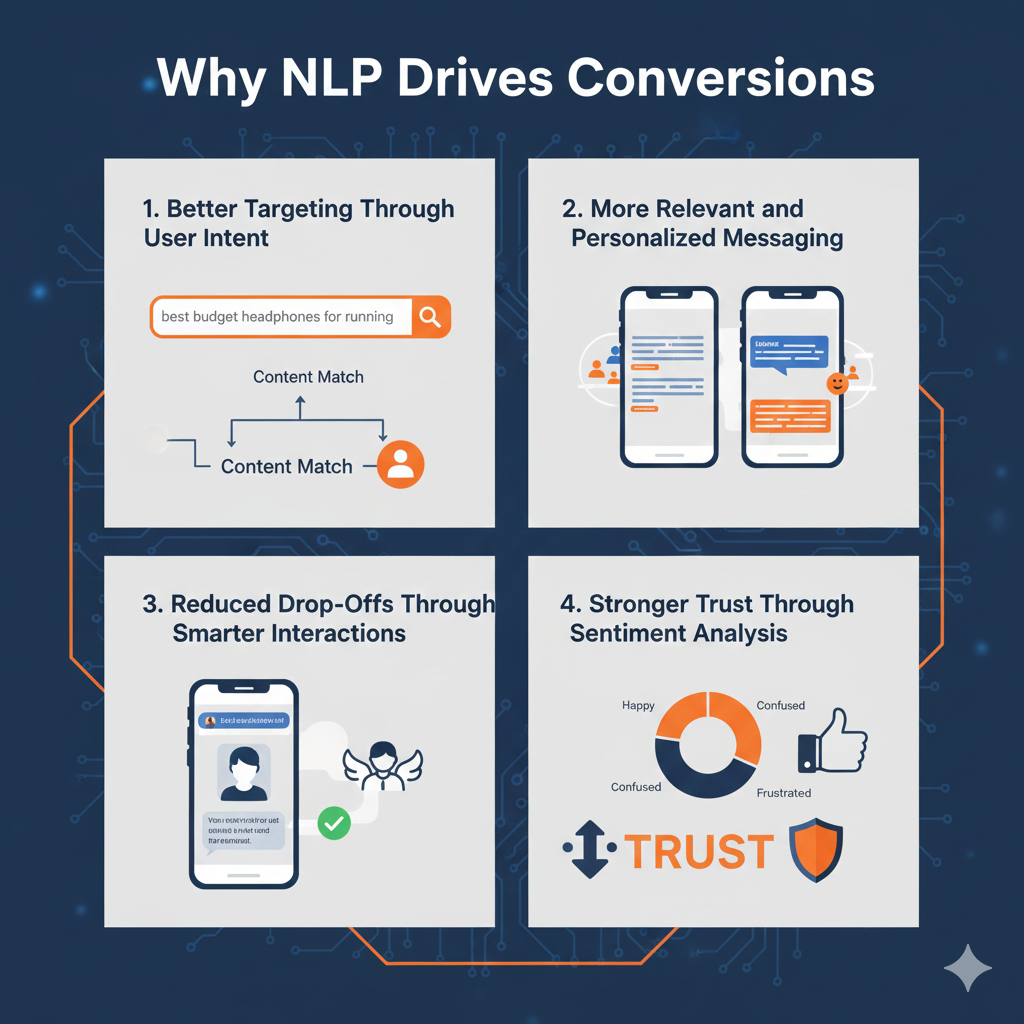
Key Applications of NLP in Digital Marketing
1. Smarter SEO Content
NLP-powered tools analyze search intent so content creators can target what users actually mean, improving topical relevance and semantic depth rather than just keyword frequency.
2. Chatbots and Conversational Marketing
NLP enables chatbots to understand nuanced customer questions, handle multiple phrasings of the same request, and respond in a natural tone, improving both support speed and customer satisfaction.
3. Sentiment Analysis for Brand Monitoring
By scanning reviews, comments, and social mentions, NLP tools detect whether sentiment around a brand is positive, negative, or neutral, giving marketing teams real-time insight to adjust messaging.
4. Personalized Email and Ad Copy
NLP models help generate and test variations of ad copy or email subject lines based on the language patterns that resonate most with specific audience segments.
5. Voice Search Optimization
Since voice queries are longer and more conversational, NLP helps businesses structure content in a Q&A format that matches how people actually speak.
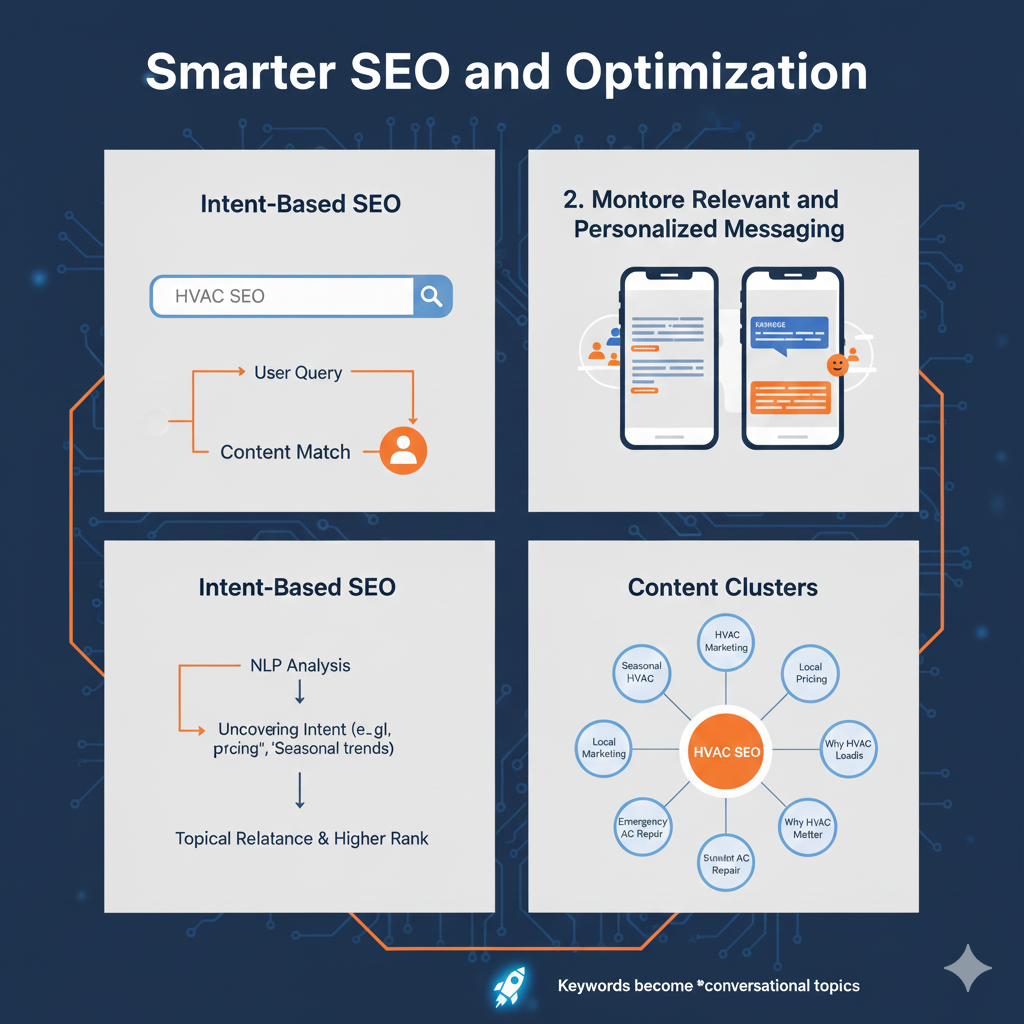
How to Optimize Your Content for NLP, SEO, and AEO Together
- Write in natural, conversational language. Avoid robotic keyword stuffing search engines now reward clarity and context.
- Answer questions directly near the top of the content. This improves your chances of being pulled into AI-generated answers.
- Use semantic keywords, not just exact-match ones. Include related terms and phrases a human would naturally use.
- Structure content with clear headers (H1, H2, H3). This helps both search crawlers and NLP models parse your content hierarchy.
- Add FAQ sections. These directly match how people phrase voice and AI search queries.
- Keep sentences readable. Shorter, clearer sentences are easier for NLP models to extract and summarize accurately.
The Future of NLP in Marketing
As AI search tools continue to evolve, the brands that win won’t be the ones with the most keywords they’ll be the ones whose content genuinely sounds human, answers real questions, and builds topical authority. NLP isn’t replacing marketers; it’s giving them a sharper understanding of the people they’re trying to reach.
Conclusion
NLP is no longer a “nice to have” for digital marketers it’s the foundation behind how modern search, customer service, and content strategy actually work. From powering chatbots that resolve queries instantly to helping brands understand real customer sentiment, NLP is quietly shaping every touchpoint of the customer journey.
The brands that adapt early writing naturally, answering questions directly, and structuring content the way people actually search will be the ones that stay visible as search engines and AI tools keep evolving. Whether you’re refining your SEO strategy or building smarter customer experiences, understanding NLP is no longer optional. It’s a core skill for staying relevant in modern digital marketing.
Frequently Asked Questions
What is NLP in digital marketing?
NLP is AI technology that helps marketing tools understand and respond to human language, powering chatbots, search optimization, and sentiment analysis.
How does NLP improve SEO?
It helps content match real search intent rather than exact keywords, which is increasingly important for ranking in AI-driven search results.
Is NLP the same as AEO?
No, but they’re connected. NLP is the underlying technology; AEO (Answer Engine Optimization) is the strategy of structuring content so AI-driven answer engines can easily extract and present it.